


Written by David N. Tshimba, Ph.D.
Mr. Tshimba, works with the Centre for African Studies – Uganda Martyrs University
WHAT THE YOUNG UGANDAN LAYMEN WHO WERE ELEVATED TO SAINTHOOD ARE WHISPERING TO THE UGANDAN CLERGY
Our Holy Ugandan Martyrs were certainly not the first Namugongo guests on death row. To be sure, these Christian martyrs were the last batch in the long, eventful nineteenth century in Buganda to be summarily sentenced and brutally executed at Namugongo. And, as Saint Pope Paul VI who canonised them quipped, we still dare hope that they be the last!
So, by the time Mwanga II ascended to the Ganda throne, Namugongo had been pretty much synonymous with a burning graveyard for those subjects whose paths would cross with the king’s the wrong way. With the progressively diminishing sway of Islam over Muteesa’s royal court (following the Muslim martyrdom), the new Abrahamic faith – Christianity – gained significant momentum at Mwanga’s royal court..
David N. Tshimba, Ph.D.
Kabaka Muteesa I, also known as Mukabya Walugembe, had his share of brutal executions: By the time the English explorer Henry Stanley was zooming into the Buganda royal court in 1875 – with his message of European Christian civilisation – Muteesa had sent a faction of his Muslim pages to face their deaths at Namugongo. These Muslim martyrs had been exposed to the Quranic injunctions as per the Maliki interpretation of Islam by the Egyptian-Turkiya instructors. Some sources report 70, others 100 and still others 300 Muslims to have been executed across Buganda on the orders of Muteesa, for they had considered Kabaka Muteesa to be Kaafir (non-Muslim) since he too had not undergone the Islamic rite of circumcision, and hence unworthy of leading them in Salat. Muteesa’s predecessors too, Suuna II and Semakokiro, no doubt had their own share of skeletons in their closets, mostly from Ganda tradi-spiritualists who at one episode or the other dared to challenge kingly power.
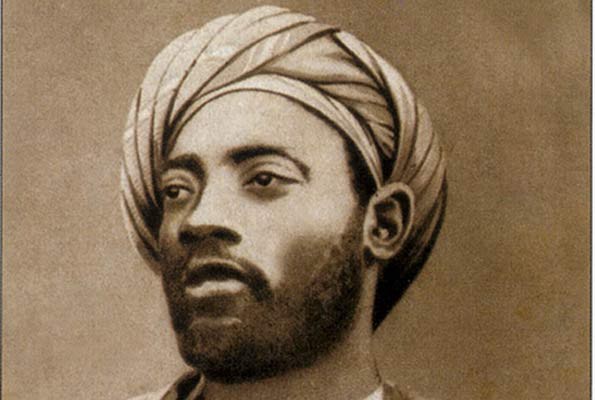
Mwanga II
So, by the time Mwanga II ascended to the Ganda throne, Namugongo had been pretty much synonymous with a burning graveyard for those subjects whose paths would cross with the king’s the wrong way. With the progressively diminishing sway of Islam over Muteesa’s royal court (following the Muslim martyrdom), the new Abrahamic faith – Christianity – gained significant momentum at Mwanga’s royal court. And if Islam reached Buganda from two different routes, namely from the East coast (Arab-Zanzibari caravan traders carrying the Sunni interpretation of Islam) and from the North (Turkish-Egyptian recruiters carrying the Maliki interpretation of Islam), Christianity too arrived in Buganda in two varying denominations: Roman Catholicism and Anglican Protestantism.
But what is it that eventually made the martyrdom of Christian neophytes appear unprecedented and indeed epoch-making? The young Kabaka Mwanga succeeded his father in October 1884 when the Catholic missionaries had withdrawn to Bukumbi (south of the lake), two years earlier, in great trepidation. But their withdrawal did not mean an end to Catholic evangelizing mission in Buganda. For, the converted pages continued to meet and an increasing number of neophytes were taught. Responsibility for the propagation of the Catholic faith increased among Baganda converts, both inside and outside the royal palace.
Looming threat to authority
In his bid to assert his authority and in view of his personal antagonisms with the three Protestant missionaries, more especially Rev. Robert Ashe, Mwanga sanctioned the death of the first three Ganda Protestant Christians on 31 January 1885. The young Protestant converts, Makko Kakumba, Nuwa Serwanga and Yusuf Lugalama, who were all members of the CMS mission household, became the very first Christian Ugandan Martyrs. But Mwanga would grow even more anxious about his losing grip on the absolute and unquestionable power, in comparative terms to his predecessors. A new, greater looming threat to Buganda’s independence emerged from the East African coast with the intrusion of German imperialism early in 1885. In an outburst of rising fear of a European invasion, Mwanga sanction the killing, in Busoga on 29 October 1885, of the 38-year-old Anglican Bishop James Hannington.
But Mwanga would grow even more anxious about his losing grip on the absolute and unquestionable power, in comparative terms to his predecessors.
Tshimba (PhD)

One of his highly placed royal pages and a recent convert to Catholic Christianity, Joseph Mukasa Balikuddembe, had spoken truth to power when he reminded Kabaka Mwanga of the impropriety of plotting to kill the Anglican Bishop, who was approaching Buganda from an ill-fated route from the East. A brief biographical sketch of Joseph Mukasa may prove illuminating here. Joseph Mukasa, according to the ethnographic research of Bishop Emeritus Mathias Ssekamanya, was raised by his grandfather, Mufumbyagganda, in Lukayi village. He was a dear childhood friend with James Miti, son of Chief Kabazzi. Growing up, Mukasa requested his father, Njuba-eseeta, to allow him to remain at Miti’s with Chief Kabazzi and so was granted permission. This opportunity eventually led Mukasa to the royal palace (Muteesa’s), which marked a turning point in his life. In 1879, Kabaka Muteesa got infected with gonorrhea, which lasted several months. Seven young male royal pages were selected to attend to the king, among whom were Joseph Mukasa and Jamari Muzeeyo. On 02October 1880, Mukasa enrolled in Catholic catechism classes along with Andrea Kaggwa and Matayo Kirevu. Mukasa’s assured protection to the new Christian converts rendered him famous at the royal palace, earning him the nickname “Balikudembe”. But it was Mukasa’s commitment and obedience that earned him the king’s trust, particularly after having once saved Muteesa from a cobra. This made Mukasa an indispensable page at the palace. So influential was Mukasa’s persona at the royal palace that when prince Mwanga acceded to the throne he swiftly made him the king’s close advisor and head of his guards. By the same token, Katikkiro Mukasa Nsimbi (of the old guard) feared Joseph Mukasa’s increasing influence, especially following his appointment by Mwanga as the royal palace’s majordomo.
Also Read: The-story-of-the-twenty-two-catholic-uganda-martyrs
From martyrs to saints
It is against this backdrop that one may deeply appreciate Joseph Mukasa’s daring rebuttal to Kabaka Mwanga’s plotting to kill Bishop Hannington. And in the same breath, we can also anticipate the grudge-filled advice of Katikkiro Mukasa Nsimbi to the king, insisting on severe (read capital) punishment for Joseph Mukasa’s ‘crime of insolence’ to the person of the king. Thus was Joseph Mukasa Balikuddembe condemned to death and executed on 15 November 1885. He became the first Ganda Catholic convert to suffer martyrdom. The floodgates of Christian religious persecution widely opened in the ensuing months as Mwanga relocated in refuge to Munyonyo following a series of ecological calamities in the month of February 1886, coupled with melancholic expeditions on the lake. Mwanga’s old regime guards saw in the new religion the making of their world anew. As the Christian Gospel underscored giving to Caesar what is Caesar’s and to God what is God’s, yesteryear’s losers of Islamisation wave at the Ganda royal court became Christianity’s fiercest enemies. Yet, amidst persecution, the newly catechized subjects—both inside and outside the royal court—still embraced the new Christian faith with an almost unparalleled fervour. As the prolific Mill Hill missionary Rev. Fr. J.P. Thoonen (1941, p. 9) puts it,
- The African. We see them [Uganda Martyrs] showing their discipline, their dignified bearing, their thirst for knowledge, their good humor, their ready wit, their delicate sense of justice and goodness, their spirit of proselytism. We see them astonishingly free from inconstancy, caprice, untruthfulness, dishonesty, vanity and immorality, with which Africans are so readily credited. We see the African at his best, the African searching for the pearl of great price and, having found it, selling joyfully all he has, even life itself, in order to buy it.
Construed as imminent enemies of the kingdom, twenty-three Protestant and twenty-two Catholic converts who mostly served at the royal court were condemned to death and martyred. Suffice here to note that the Catholic Martyrs, in the main, had the least exposure to the new evangelized faith: They were catechized for a short four years at the very most, yet they too went on to display the highest virtues of evangelisation, to the point of wilful martyrdom. These Holy Ugandan Martyrs—declared in October 1964 the first African saints of modern times—can today whispering to the newly ordained clergy some important clues to navigate the challenges of our times. For having been trained from childhood to unswerving fidelity and allegiance to the sacred office of the king, “whose trusted servants they were proud to be”, they still rose unhesitatingly to that perfect loyalty “which gives to Caesar the things that are Caesar’s and to God the things that are God’s” (Thoonen 1941, p. 7).
Hope tomorrow.
It is my deep-seated hope that, in ever commemorating of the lives, deaths and afterlives of these canonized Uganda Martyrs, the clergy and lay people alike, today and and into the future, may recover a fuller and richer sense of vocation for godly public life. And more than ever before, our Church today yearns for that a truly decolonised yet authentic understanding of the Gospel which Joseph Mukasa and his confreres lived and died for, doesn’t She?
SILENT WHISPERS: WHAT THE UGANDA MARTYRS WOULD SAY TODAY.
What The Young Ugandan Laymen Who Were Elevated To Sainthood Are Whispering To The Ugandan Clergy
— Social Communications Kampala Archdiocese