
The Uganda Martyrs: Exploring Namugongo’s History & Legacy
Written by Kalungi Patrick J. -KPJ is a Father and child of the FATHER
kalungipj@gmail.com
Step onto the hallowed ground where faith met the fire. Follow the Uganda martyrs’ path from the decree at Munyonyo to the triumph of Namugongo. Discover the courage of St. Charles Lwanga and why millions still trek to these sacred shrines today.

Imagine standing on ground where, in 1886, 13 of the 22 young men (pages in the court of the King) were burned to death simply because they refused to renounce their newfound Christian faith. They were given a choice: live, or stay true to what they believed. They chose the latter. Whether you share their faith or not, that level of courage stops you in your tracks. It makes you ask yourself tough questions about your own values. It’s not a sermon but it’s a history lesson written in sacrifice and resilience, and it has drawn millions, including three different popes, to walk this same ground. This is why the Namugongo and Munyonyo Martyrs Shrines are places you not only site but feel in your soul.
If you are reading this, you are likely someone with a restless heart; a holidaymaker not just seeking for new landscapes, but for meaning. You’ve perhaps walked the ancient pilgrim paths of Europe or stood in awe before the great cathedrals. You are searching for a place where history isn’t just studied, but felt in your bones.
KPJ
Let me, tell you about a destination that belongs on your sacred map: Uganda, and specifically, the hallowed grounds of Namugongo and Munyonyo Martyrs Shrines.
Every year, on the 3rd of June, the world turns its eyes to Uganda, Namugongo Martyrs Shrine an Inner Sanctum outside Kampala. It is a day when the line between the spiritual and the physical blurs, a day when we commemorate the Uganda Martyrs (22 young catholic men) who, in the 1880s, chose death over denying their faith. To guide someone here is not to show them a building; it is to walk them through a living testament to conviction. This piece is my personal invitation for you to come and experience it for yourself.
Why a Pilgrimage to Uganda is a Journey for the Soul
I have stood alongside pilgrims from across Africa (from Kenya to Nigeria) and visitors from as far as the cathedrals of Rome and the busy streets of Chicago all of them standing on the same ground where history shifted over 100yrs ego. They arrive with diverse intentions; some come to petition for a miracle, while others seek to understand a faith or conviction so fierce it remained unbroken by death. Yet, regardless of why they come, they almost always leave with the same profound realization and conviction: that they have touched something real.
What makes this pilgrimage so powerful is its honesty. This is not a sanitized story or a distant myth; it is a raw, a historical account of a kingdom that was in the middle of change.
In the 1880s, the Kingdom of Buganda was like a ‘pressure cooker’ of political and religious tension. Arab traders had introduced Islam, while European missionaries (the Catholic White Fathers and the Anglican Church Missionary Society) had arrived with competing Christian denominations. At the center of this storm was the young Kabaka (King) Mwanga II. Having recently ascended to the throne in 1884, he viewed this new “foreign” religion as a direct threat to his absolute authority and the traditional customs of his ancestors.
The Choice: Faith or the Flame: The individuals caught in this crossfire were primarily his court pages; young men and boys, some as young as 14-year-old St. Kizito. These were not outsiders; they were the King’s trusted inner circle. When they began to prioritize the laws of God over the traditions of the palace, the King gave them a brutal ultimatum: renounce your faith or face the executioner.
Their refusal to yield triggered a wave of executions between 1885 and 1887, beginning with the Anglican Bishop James Hannington and culminating in the flames at Namugongo.
When you stand at Namugongo today, you aren’t just visiting a monument. You are standing at the exact site where, on June 3, 1886, St. Charles Lwanga and his companions were wrapped in reed mats and cast into the flames. You are standing on the very ground where a teenagers’ conviction proved more durable than a King’s power. It is a place where faith wasn’t just practiced: It was tested by fire.
Reclaiming the Truth about the Uganda Martyrs
Over the years, I’ve heard individuals express hesitation about visiting these monumental spiritual sites. Let me try to address the two most common concerns head-on.
This is just for Catholics: This is perhaps the most common misconception. While the Catholic Church canonized its 22 martyrs in 1964, the story is ecumenical. In fact, 23 of the martyrs were Anglican converts and it is said that there were Moslems too. The shrines at Namugongo stand almost side-by-side (a Catholic Basilica and an Anglican shrine), both honoring young men who died for their belief. It is one of the most powerful symbols of unity I know.
I have to come on June 3rd. The spectacle of Martyrs Day is, without a doubt, overwhelming in the best way. With over two million pilgrims converging on the site, the energy is electric. But if you seek a quieter, more personal connection, come any other day of the year. I have sat with holidaymakers at the Munyonyo shrine during the Christmas season, with only the birds and the breeze for company, and watched them absorb the gravity of the place in profound silence.

Exploring Namugongo’s History & Legacy
To truly understand the journey of the Uganda Martyrs, you must walk it in reverse. The martyrs began their final march from Munyonyo and ended it at Namugongo. Here is how you can follow their path today.”
1. Begin at Munyonyo where the Walk Began.
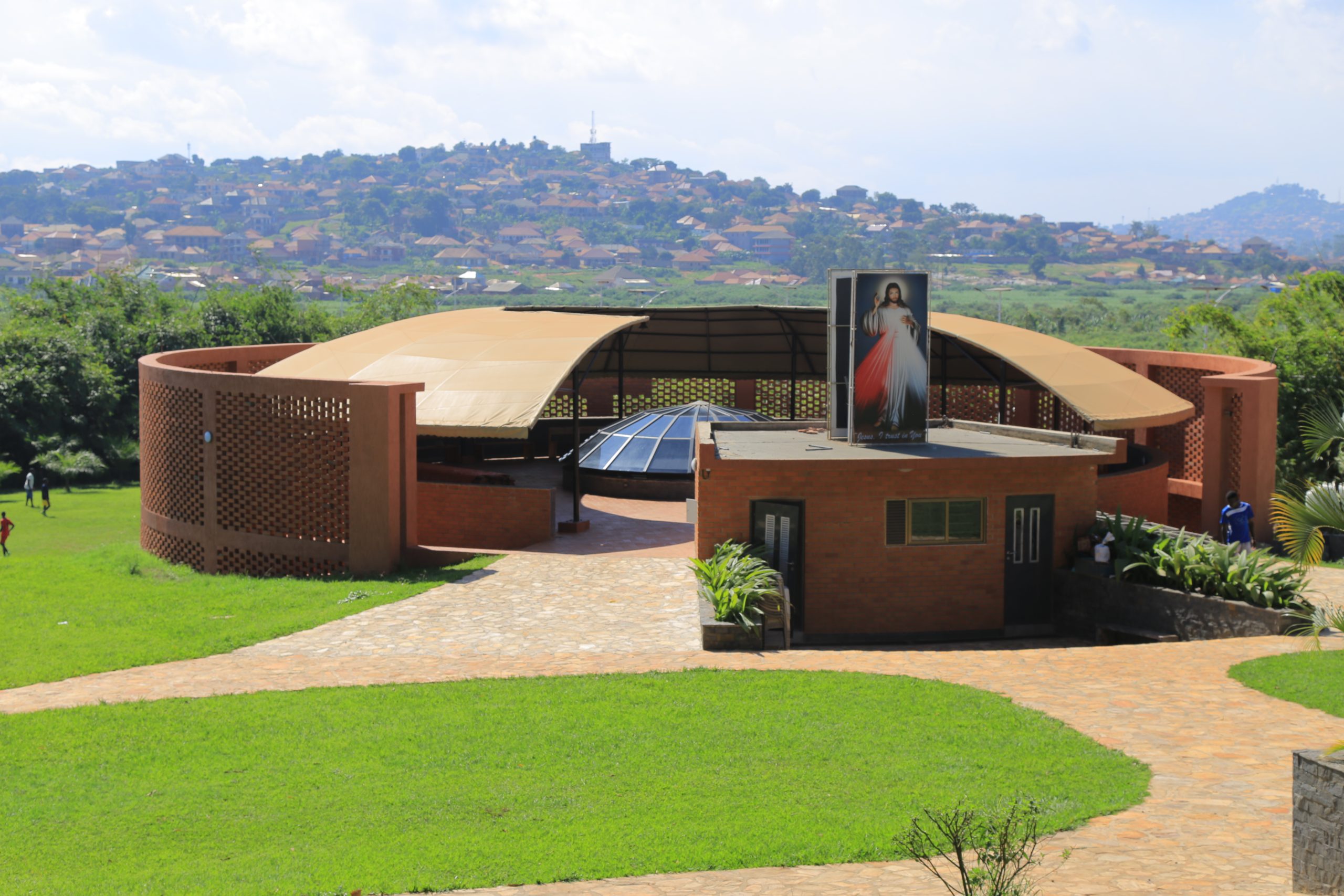
Your journey into the heart of Uganda’s spiritual history begins just 13 kilometres south of Kampala’s city centre at the Munyonyo Martyrs’ Shrine. Situated on the northern shores of Lake Victoria, this was once the site of King Mwanga II’s royal palace and the exact threshold where a fateful chain of events was set in motion.
The Night of Courage: It was here, on the night of May 25, 1886, that St. Charles Lwanga—leader of the Christian pages—secretly baptized four young catechumens, including the youngest martyr, 14-year-old St. Kizito. This act of defiance and faith occurred just hours before the King’s court was forever divided.
The Decree of Death: By the next morning, May 26, the atmosphere shifted. Under the shade of a Muwafu (incense) tree, King Mwanga II officially pronounced the death sentence on the Christians, separating them from the rest of his court. Today, you can still visit the site of this tree, where the weight of that decree still lingers in the quiet air.
Hallowed Ground: As you walk the serene, landscaped grounds, you will encounter the specific spots where the first blood was shed: St. Denis Ssebugwawo; The first to be speared by the King himself on May 25, 1886, for refusing to renounce his faith. St. Andrew Kaggwa; The Kiggozi (Head of the King’s bands), who was martyred here on May 26, 1886.
A Modern Sanctuary: Dominating the skyline is the Munyonyo Minor Basilica. Consecrated in 2017 and later elevated to a Minor Basilica by Pope Francis, the structure is a breathtaking blend of the ancient and the new, crowned by a 47-metre cross. It stands as a testament to the endurance of the faith that was tested on these very grounds over a century ago.

2. Traced in Faith: The Martyrs’ Sacred Walk from Munyonyo to Namugongo
Following their condemnation at Munyonyo, the prisoners began a brutal, two-day forced march to Namugongo, the royal execution grounds. This 27-kilometre trek (referred to as the martyrs’ “Walk to Calvary”) was intended to break their spirits, yet it became a soul-inspiring pilgrimage of endurance.
The First Sacrifice: The cruelty began almost immediately. On the evening of May 26, 1886, St. Pontiano Ngondwe became the first to fall on this road. At a place then called Ttakajjunge (near present-day Kyamula-Salaama), the chief executioner, Mukajjanga, speared him in the chest multiple times. Tradition tells us his body was dismembered and left behind as a warning to the others. Today, the St. Pontiano Ngondwe Catholic Parish stands near the site of his martyrdom as a permanent memorial to his courage.
A Road Re-imagined Other martyrs were also killed or abandoned along this route before reaching the main site: St. Gonzaga Gonza: Speared at Lubowa after his chains broke and he could no longer walk. St. Matthias Mulumba: Left to die at Old Kampala after being hideously mutilated.
While you will likely travel this modern road by car, the drive offers a rare opportunity for reflection. As the landscape passes by, consider the physical and spiritual strength required for those young men to walk toward certain death, yet with their heads held high in faith.
Modern day memories of the Uganda Martyrs along the way to Namugongo.
As you move from the shrine at Munyonyo toward the final execution site, the road is dotted with modern landmarks that serve as spiritual “stations” where you can pause and connect with the individual stories of the martyrs. These sites have been carefully preserved by the Kampala Archdiocese to ensure their sacrifice is never forgotten.
1. The Shrine of St. Pontiano Ngondwe: Kyamula-Salaama
Your first significant stop along Salaama Road is the St. Pontiano Ngondwe Catholic Parish. This landmark is built directly across from TtakaJjunge, the exact spot where St. Pontiano was speared. Is said that it’s at the site of today’s, modern shrine and monument, mark the location where Catholics and Anglicans reportedly prayed the Lord’s Prayer together for the first time while the executioners carried out their grim work.
2. The “Trail of Blood” through Kampala
As the path enters the city, modern landmarks continue to mark the martyrs’ progress:
But sometimes the desert has a timeline we don’t control. And trusting that doesn’t mean giving up but it means believing that what’s growing in you during this hard season matters as much as what’s waiting on the other side.
- Old Kampala (St. Matthias Mulumba): Near the current Old Kampala Catholic Parish, you can visit the site where St. Matthias Mulumba was hideously mutilated and left to die over three agonizing days. His endurance is memorialized by a sculpture and a dedicated chapel.
- Nakivubo (St. Athanansio Bazzekuketta): Located in the heart of downtown Kampala near the Nakivubo stadium, a small monument marks the spot where St. Athanansio was martyred after he requested to be killed on the spot rather than walk further.
- St. Balikuddembe Market: Even the bustling Owino Market contains a sacred space; the martyrdom site of St. Joseph Mukasa Balikuddembe, the first Catholic martyr, who was beheaded and burnt on November 15, 1885.
As you navigate these modern spaces, you aren’t just seeing buildings, you are tracing a 140-year-old map of courage that transformed a death march into a national heritage.

3. Namugongo: Where the Journey Ends and the Legacy Begins
To arrive at Namugongo is to stand at the Site of Triumph, the final chapter of a journey that began in the king’s court at Munyonyo. Located approximately 15 kilometres northeast of Kampala, Namugongo was historically the primary execution ground for the Buganda Kingdom.
The Holocaust of Faith: It was here, on June 3, 1886, that the persecution reached its climax. Of the 22 Catholics martyrs, the remaining 13 were executed at this site, alongside 13 Anglican martyrs and dozens of other prisoners. In a final, brutal act of defiance, these 13 young men that included their leader, St. Charles Lwanga, were wrapped in reed mats (known as ndago) and burned alive in a massive funeral pyre.
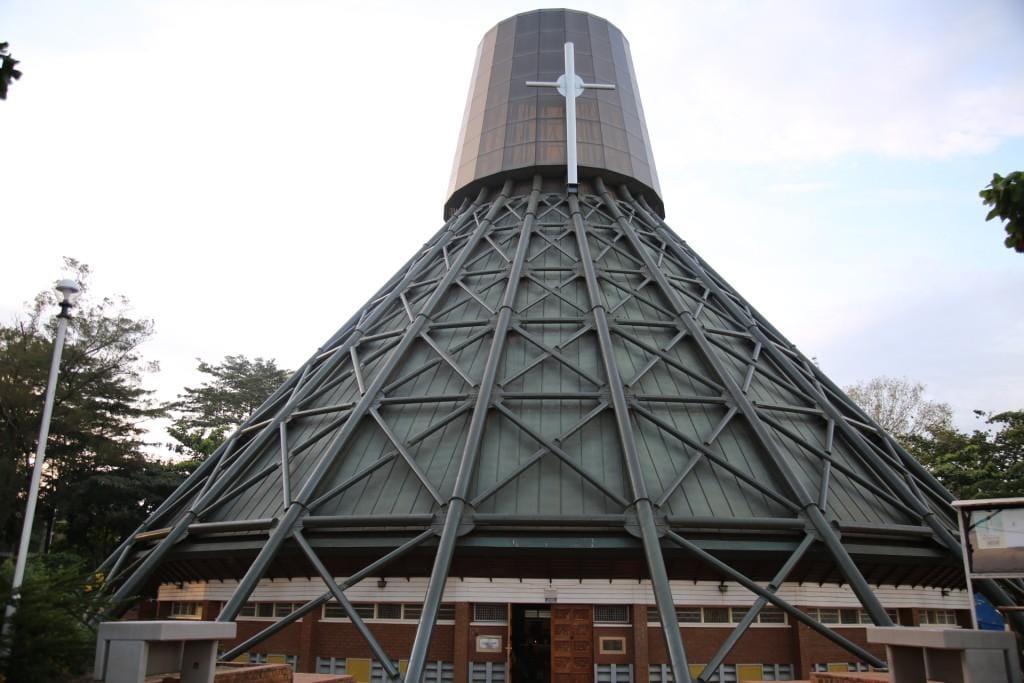
Memory immortalized: Today, the skyline is defined by the magnificent Uganda Martyrs Basilica. Its architecture is a deliberate, symbolic tribute:
- The 22 Copper Pillars: Standing over 100 feet tall, these pillars represent the 22 Catholic martyrs canonized by the Church.
- The Sacred Roof: The conical shape of the roof mimics a traditional African hut, grounding this universal story in Ugandan heritage.
- The Altar of Sacrifice: Inside the Basilica, the main altar is positioned directly above the spot where St. Charles Lwanga was martyred on his own small, separate fire.
A Place for Holiness: The interior of the basilica is designed for reflection, with 1,000 seats arranged in a circle to foster a sense of community and shared prayer. Walk slowly through these hallowed halls; as you sit in the quiet, you can almost hear the echoes of the songs the martyrs sang as they faced the flames.
Beyond the Basilica, you can also visit the Anglican Martyrs’ Museum, which features lifelike reconstructions of the martyrs in the reed huts, and the Martyrs’ Lake, a site of deep peace where the executioners once washed their hands.

4: A Moment by the Water
Just behind the Basilica lies one of the most tranquil spots on the grounds: the Martyrs’ Lake. This serene, man-made body of water is more than a landscape feature; it is a living connection to the events of 1886. Historically, it was fed by the nearby springs where executioners (including the chief executioner, Mukajjanga) would wash their blood-stained spears and tools after the executions.
The Tradition of Healing: Over the decades, this water has become a powerful symbol of purification and grace. Many pilgrims believe it carries special blessings, viewing it not as mere water, but as a medium for the intercession of the martyrs. You will likely see people from all walks of life filling plastic jerrycans to take home to sick relatives or gently pouring the water over their heads in prayer.
The Tradition of Healing: Over the decades, this water has become a powerful symbol of purification and grace. Many pilgrims believe it carries special blessings, viewing it not as mere water, but as a medium for the intercession of the martyrs. You will likely see people from all walks of life filling plastic jerrycans to take home to sick relatives or gently pouring the water over their heads in prayer.
Connecting to the Cloud of Witnesses: I always tell those that visit Namugongo: don’t be shy. Whether you choose to carry some home or simply sit on the banks in reflection, you are joining a tradition that has sustained millions of pilgrims over the last century. There is a profound beauty in seeing a place once used to wash away the evidence of death now being used to seek the gift of life and healing.
Notable Facts for your Visit:
- The Pavilion: In the center of the lake stands a beautiful altar-pavilion, where Pope John Paul II famously celebrated Mass in 1993, and Pope Francis visited in 2015.
- Renovations: The lake was significantly expanded and beautified ahead of the 2015 Papal visit to accommodate the growing number of pilgrims who seek its “Holy Water.”
If you are planning a longer stay, consider visiting other sacred sites tied to this story, like the Kigungu Missionary landing Site on the Lake Victoria shores near Entebbe International Airport where the first Catholic missionaries landed. Feel free to contact the Kampala Archdiocese for more information or visit the Kampala Archdiocese website.
The Pilgrim’s Secret: Moving Beyond the Sightseer’s Lens
The most common downside I see is also the easiest to fall into and that is, treating these shrines as just another stop on a holiday itinerary. It is so easy to rush through with a camera, “ticking boxes” and capturing the perfect shot of the Basilica, while entirely missing the heartbeat of the place.
How to Sidestep the “Tourist Trap”
To truly experience Namugongo or Munyonyo, you have to prioritize presence over pictures. Here is how to do it:
- Seek the Silence: After you’ve seen the grand monuments, find a quiet bench; perhaps by the Martyrs’ Lake or within the terraced gardens at Munyonyo.
- Put the Phone Away: For fifteen minutes, let the digital world fade.
- Read the Names: Look at the list of the 22 Catholic. Say their names (Lwanga, Kizito, Kaggwa, Ssebugwawo, Ngondwe).
- Humanize the Heroism: Reflect on their ages. St. Kizito was only 14; many others were merely teenagers or in their early twenties. They weren’t superhuman figures from a distant myth; they were young men with families, hobbies, and futures, possessed by a conviction that simply would not bend.
When you sit with that realization, the site stops being a historical landmark and starts becoming a sanctuary.

The Living Testimony
If your visit falls in the weeks leading up to June 3rd, you will witness a modern miracle: the “Foot Pilgrims.” Thousands of people trek from as far as Kenya, Rwanda, Tanzania, and even the DR Congo; some walking over 1,000 kilometres to reach this ground.
Don’t just watch them pass; speak to them. Ask them why they are walking. Some are there to give thanks for a miracle, others to beg for the intercession of the martyrs for a sick child or a struggling harvest. Their stories are “living bibles” that will enrich your journey far more than any guidebook ever could. You’ll find that the pilgrimage isn’t just about what happened in 1886 but it’s about the faith that is breathing and walking right beside you today.
Your First Step Toward the Sacred: You feel it now, don’t you? That quiet pull to witness this story for yourself. That’s the beginning of your own pilgrimage. Don’t let the moment fade—here is how to turn that inspiration into a journey.
How to Sidestep the “Tourist Trap”
To truly experience Namugongo or Munyonyo, you have to prioritize presence over pictures. Here is how to do it:
- Mark Your Calendar.
If you want to experience the awe-inspiring energy of a global gathering, plan to be in Uganda by late May for the June 3rd Martyrs’ Day celebrations. You’ll join millions in a sea of faith. However, if you seek a “Thin Place” for deep, quiet reflection, the shrines are open and arguably even more powerful during the rest of the year when the crowds have thinned. - Let Us Handle the Details.
A pilgrimage shouldn’t be overshadowed by logistics. Visit the Kampala Archdiocese Website [Booking Form] to share your vision. Whether you need reliable transport from Entebbe, suggestions for peaceful accommodations near Namugongo, or a guided walk along the Martyrs’ Trail, The Kampala Archdiocese will make your journey seamless. - Join the Conversation.
What part of this story speaks to you most? Is it the unbreakable leadership of St. Charles Lwanga? The staggering innocence of 14-year-old St. Kizito? Or perhaps the rare ecumenical unity of Catholics and Anglicans standing together in the face of the fire? Leave a comment below—I would be truly honoured to hear what draws you to this sacred ground.

The Uganda Martyrs gave everything for a truth they carried in their hearts. The very least we can do is take the time to remember them. I hope to personally welcome you to this hallowed soil very soon.
If this article touched something in you, share it with someone who needs to hear about unwavering devotion. And if you’re looking for more information on how to make your visit to Uganda and specifically to the Uganda Martyrs Shrines, please visit website of the Kampala Archdiocese.
THE CROWN OF THE JOURNEY: A PILGRIM’S GUIDE TO NAMUGONGO, UGANDA MARTYS SHRINE
The Uganda Martyrs: Exploring Namugongo’s History & Legacy
— Social Communications Kampala Archdiocese